
 See Our Latest Article on HelloNation
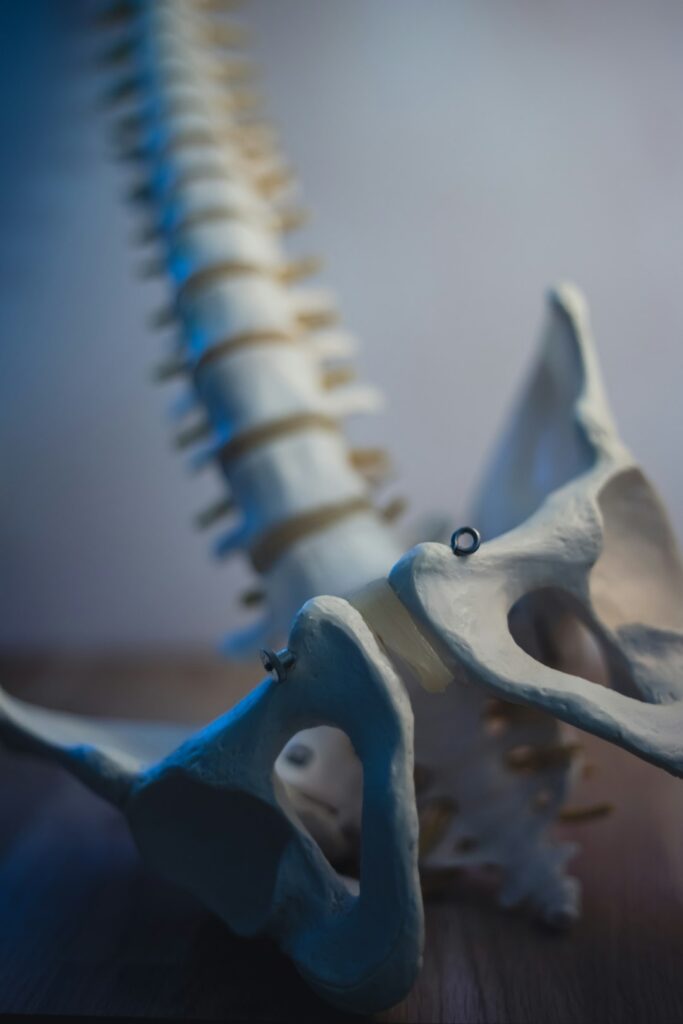
Spinal adjustments are controlled manual movements intended to influence how spinal joints move and how the nervous system processes sensory information. They may reduce pain and improve movement for some people, but the science does not support the idea that an adjustment permanently “puts a bone back in place” or corrects every underlying cause of back or neck pain.
What is a spinal adjustment?
A spinal adjustment, also called spinal manipulation, uses a carefully directed force on a spinal joint. The movement may be quick and brief, or it may be slower and more sustained. Some techniques use the hands, while others use a handheld instrument or a positioning table.
Adjustment is different from mobilization. Mobilization uses gentler, repeated movements within a joint’s normal range. It usually does not involve the quick thrust that can produce a popping sound.
The goal is generally to influence pain, stiffness, and movement—not to reshape the spine. A person may feel looser afterward, but that sensation does not necessarily mean that a vertebra was physically shifted into a new permanent position.
Why can an adjustment change how the body feels?
The best current explanation involves several overlapping effects rather than one single mechanism.
Spinal joints, muscles, ligaments, and nearby tissues contain sensory receptors. These receptors send information to the spinal cord and brain about pressure, movement, and tissue tension. A controlled manual force can temporarily change the signals coming from those tissues.
That may affect:
- How the brain interprets pain signals
- Muscle activity and protective guarding
- A person’s willingness to move a stiff or painful area
- Short-term joint motion
- Awareness of posture, movement, and body position
An adjustment may also stretch muscles and surrounding connective tissues. This can help interrupt a cycle in which pain causes muscle tightening, tightening limits movement, and limited movement makes the area feel more sensitive.
The popping sound sometimes heard during an adjustment is usually caused by a rapid change in pressure within a joint. It is not proof that a bone moved back into alignment, and an audible pop is not required for treatment to have an effect.
Does an adjustment realign the spine?
Usually, the answer is more limited than popular descriptions suggest. Spinal manipulation can create small, temporary changes in joint motion and may alter the way muscles respond. Research does not show that routine adjustments permanently reposition individual vertebrae in the way a mechanic might realign a bent part.
The spine is not a stack of loose blocks that regularly slips out of place during ordinary activity. Its position is supported by bones, discs, ligaments, muscles, and the nervous system. People can have asymmetrical posture, restricted movement, arthritis, disc changes, or muscle imbalance without having a vertebra that is literally “out.”
This distinction matters because pain often results from multiple factors, including irritated tissues, reduced conditioning, repetitive loading, sleep disruption, stress, previous injury, and changes associated with aging. A manual technique may help symptoms without correcting every contributing factor.
What conditions may respond to spinal manipulation?
Evidence is strongest for some types of low-back pain, especially nonspecific low-back pain in adults. “Nonspecific” means that serious disease, fracture, infection, or a clearly defined structural problem has not been identified as the cause.
Research generally finds that spinal manipulation can provide modest improvements in pain and function for some people. Its average effects are similar to those of several other conservative treatments, such as exercise-based care. Benefits may be more meaningful when manual treatment is combined with education, gradual activity, and exercises suited to the person’s needs.
Some people also seek adjustments for neck pain, certain headaches associated with the neck, or stiffness. Results vary, and treatment should be based on an appropriate health history and examination rather than on the assumption that every symptom originates in the spine.
An adjustment should not be presented as a cure for internal disease, infection, cancer, organ problems, or a neurological condition. It is also not a substitute for urgent evaluation after major trauma or when serious warning signs are present.
Is spinal manipulation safe?
For many appropriately screened adults, spinal manipulation is considered relatively safe, but it is not risk-free. Temporary soreness, stiffness, increased discomfort, or a mild headache can occur. These effects commonly resolve within a day or so.
More serious complications are very uncommon, but serious spinal or neurological problems have been reported. Neck manipulation has also been discussed in relation to rare blood-vessel injuries involving the arteries of the neck. Because the event is rare and difficult to study, its exact frequency is not known.
Safety depends partly on selecting the right technique for the right person. A thorough history should include:
- Recent falls, collisions, or other injuries
- Osteoporosis or a history of fractures
- Cancer, infection, or unexplained weight loss
- Blood-clotting problems or use of blood-thinning medication
- Numbness, weakness, loss of coordination, or changes in bladder or bowel control
- Severe or unusual headaches
- Inflammatory conditions or major neurological disorders

A person should also mention pregnancy, recent surgery, and all prescription and nonprescription medications. Some conditions may call for a gentler approach, medical evaluation first, or no manipulation at all.
What should residents consider during Kent winters?
Seasonal habits can influence the amount of strain placed on the back and neck. Snow removal, carrying wet clothing, walking on icy surfaces, prolonged driving, and spending more time sitting indoors can all change movement patterns.
A sudden increase in physical work is especially relevant. Someone who has done little lifting for several months may place a large load on the lower back during one storm. In that situation, an adjustment might address temporary stiffness, but it does not replace safer lifting technique, gradual conditioning, rest, or evaluation of an injury.
Practical steps include keeping loads close to the body, avoiding twisting while lifting, taking breaks during shoveling, and using footwear with reliable traction. Persistent pain after a fall or lifting incident deserves careful assessment rather than repeated treatment based only on symptoms.
How should someone judge whether an adjustment is helping?
Improvement should be measured by useful changes in daily function, not only by the presence of a popping sound or a short period of relief. Helpful questions include:
- Is walking easier?
- Is sleep less interrupted?
- Can ordinary household tasks be performed with less limitation?
- Is the range of motion improving?
- Are flare-ups becoming less frequent or less intense?
A reasonable care plan should have an understandable purpose and should be reconsidered if symptoms are worsening, unchanged over time, or repeatedly returning without a broader strategy. Exercise, activity modification, education, and coordination with medical care may be more important for long-term progress than manipulation alone.
Urgent medical attention is warranted for new limb weakness, loss of bladder or bowel control, numbness in the groin area, fever with severe back pain, unexplained weight loss, severe pain after significant trauma, or a sudden severe headache or neurological change.
The science supports spinal adjustments as one conservative option that may help selected people with pain and restricted movement. Their effects are best understood as short-term changes in joint motion, muscle response, and pain processing—not as permanent correction of a spine that has simply “gone out.”
